


It is nine on a Sunday evening and you are still working. Two card payments failed over the weekend, a parent wants to move her daughter from Tuesday to Thursday, three people have asked whether the beginners' class has space, and next term's rosters are still a spreadsheet you have not built yet. Most activity providers run on that patchwork of inbox, notes app, and payment links, and it quietly costs hours every week. The right class booking system takes almost all of it off you. We compared 10 of them and ranked the best for providers running recurring classes.
Quick comparison: best class booking systems at a glance
| Software |
Pembee
★ Editor's Pick
★★★★★ 4.9 (23)
|
Bookwhen
★★★★★ 4.9 (179)
|
TeamUp
★★★★★ 4.8 (346)
|
ClassForKids
★★★★★ 4.8 (99)
|
Sawyer
★★★★☆ 4.5 (319)
|
Jumbula
★★★★☆ 4.5 (127)
|
Acuity
★★★★★ 4.8 (5,754)
|
Mindbody
★★★★☆ 4.0 (2,993)
|
Amilia SmartRec
★★★★☆ 4.3 (148)
|
Arlo
★★★★★ 4.7 (147)
|
|---|---|---|---|---|---|---|---|---|---|---|
| Best for | Recurring classes & terms | Simple drop-in booking | Membership-led fitness studios | UK kids' activity clubs | US children's activity providers | After-school & enrichment programs | Mixing 1:1 and group sessions | Multi-location wellness businesses | Rec centers & multi-site orgs | Professional training providers |
| Starting price | $45/moflat, up to 5 admins | ~$15/mofree plan available | ~$104/moby active customers | ~$44/moplus ~3.1% booking fee | $149/moplus marketplace fee | $15/mo10 enrollments included | $20/mo1 calendar | $99/moper location | $99/moplus setup from $899 | $132/moper admin license |
| Free trial | 30-day trial | ✓ 14 days + free plan | Length unpublished | ✓ 7 days | Demo-led | ✓ Yes | ✓ 7 days | Demo-led | Demo-led | ✓ 14 days |
| Recurring classes & terms | ✓ Yes | ✓ Yes | ✓ Yes | ✓ Yes | ✓ Yes | ✓ Yes | Partial | ✓ Yes | ✓ Yes | ✓ Yes |
| Waitlists | Partial | Partial | ✓ Yes | ✓ Yes | Partial | Not listed | ✗ No | ✓ Yes | ✓ Yes | ✓ Yes |
| Attendance rosters | ✓ Yes | Partial | ✓ Yes | ✓ Yes | ✓ Yes | ✓ Yes | Partial | ✓ Yes | ✓ Yes | ✓ Yes |
| Family accounts | ✓ Yes | Partial | Not listed | ✓ Yes | ✓ Yes | ✓ Yes | ✗ No | Not listed | ✓ Yes | Not listed |
Capterra ratings and review counts checked August 2026. Partial means the feature is limited, manual, or gated behind a higher tier. Waitlists need Pembee's Premium plan, Bookwhen's Standard plan, and Sawyer's Grow plan. Bookwhen also puts attendance tracking on Standard, and handles children with an attendee field rather than a real family account. Acuity runs recurring group classes but has no term enrollment, and it reports on class attendance without giving you a roster to mark off. Not listed means the vendor does not document the feature, so read it as unconfirmed rather than absent. Pembee's 23 reviews are a far smaller sample than Acuity's 5,754, and we are the publisher of this post, so weigh our entry accordingly.
How we ranked these tools
We started from the tools activity providers actually shortlist, then judged each one on the jobs you repeat every week: scheduling a recurring class or a whole term, taking bookings and payments without chasing anyone, marking a roster, handling waitlists and transfers, and keeping parents or members informed.
Pricing came from official pricing pages in August 2026. Review signal came from Capterra, G2, and Trustpilot, so the pros and cons below reflect what customers report rather than what marketing pages claim. Where review volume is thin we say so instead of quoting a number as if it were solid.
We left out pure appointment schedulers with a group tab bolted on, one-off event ticketing, and quote-only enterprise platforms with no published pricing. Acuity is the one appointment-first tool we kept, because it is the product most instructors compare against before they realize a class is not an appointment.
1. Pembee - Best Overall for Activity Providers
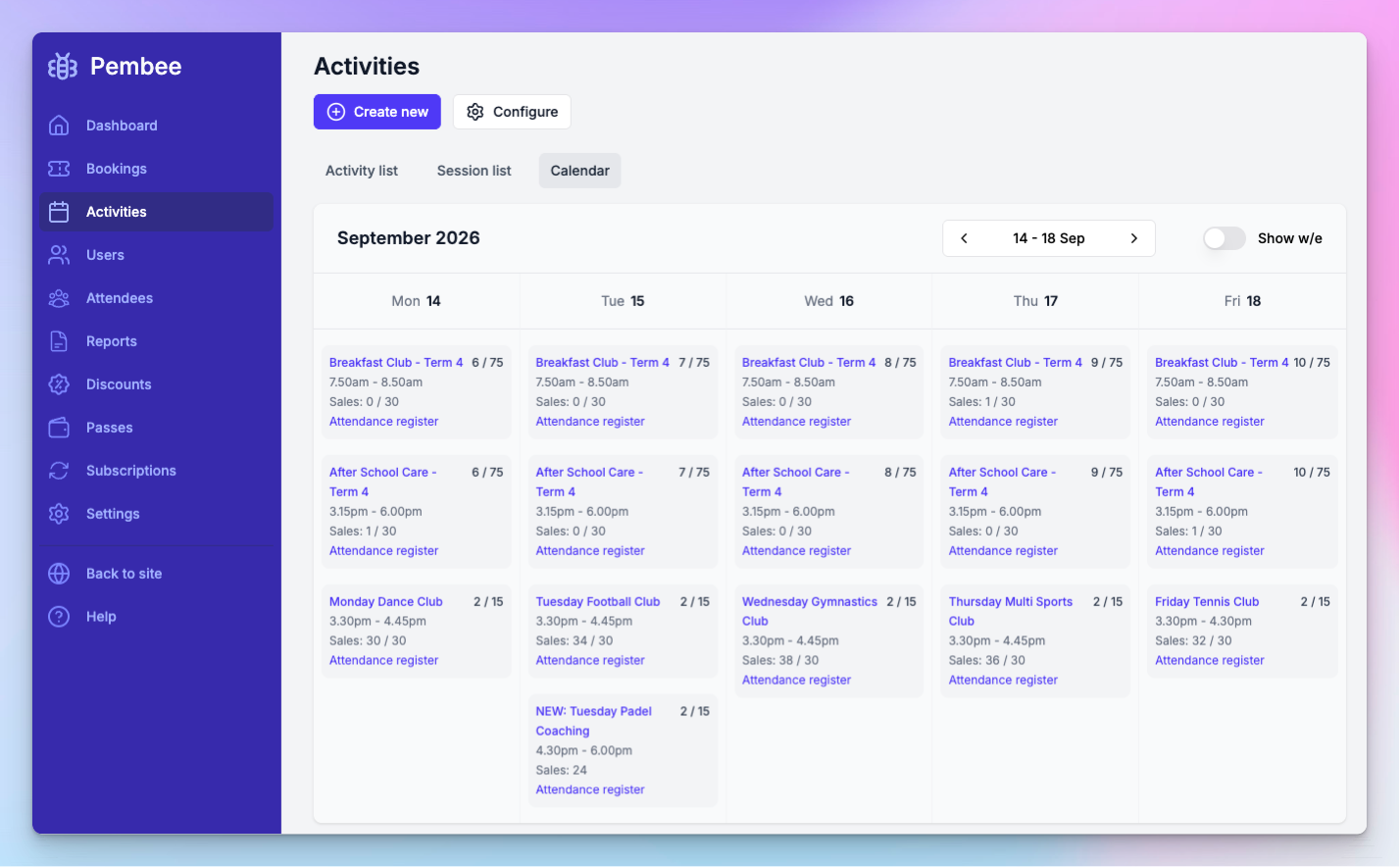
Pembee is our own class booking system, built for providers who run the same classes week after week rather than one-off appointments. Terms, rosters, family accounts, discounts, payments, and customer comms sit in one place, which is the mix a one-person admin team actually needs.
It fits owner-operators and small teams best: dance and performing arts studios, gymnastics and martial arts clubs, swim schools, yoga and pilates studios, after-school clubs, and holiday camps.
Best for: Anyone running recurring group classes, terms, or camps who wants scheduling, rosters, family accounts, and payments in one system with no contract.
Key features:
- Recurring class and term scheduling with holiday breaks and per-session capacity
- Subscriptions, class packs, trial tickets, and drop-ins sold side by side on the same class
- Attendance rosters you mark from a phone or tablet, with live capacity and no-show flagging
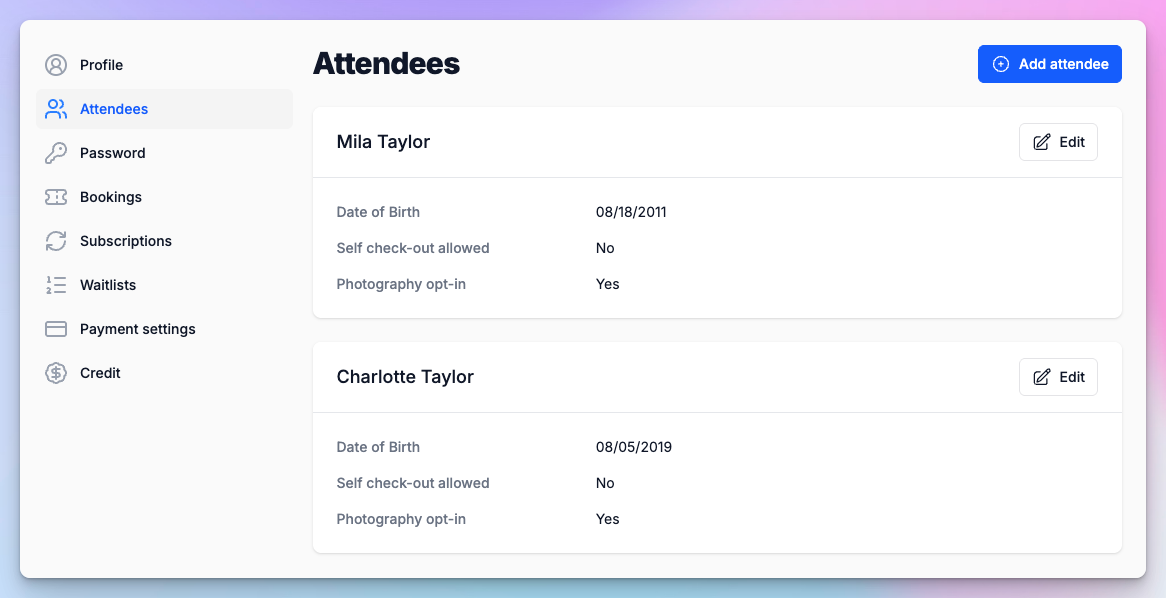
- Family accounts covering several children under one parent login, plus sibling, multi-attendee, and multi-session discounts
- Custom registration forms for medical information, emergency contacts, consent, and liability waivers
- Stripe payments including Apple Pay, Google Pay, and Klarna, with payment plans and automatic retries
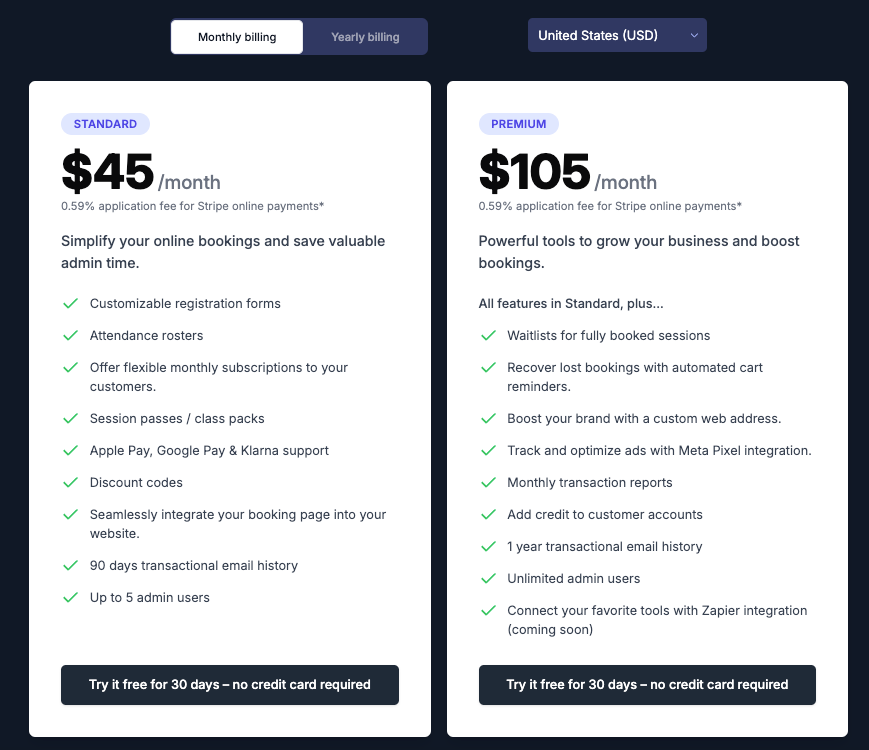
Pricing: Standard is $45 a month, or $450 a year, and covers up to 5 admin users. Premium is $105 a month, or $1,050 a year, and adds unlimited admins, waitlists, Zapier, abandoned-cart and trial follow-up emails, a custom subdomain, and monthly transaction reports. Payments run through Stripe with a 0.59% application fee on top of standard Stripe fees. There is a 30-day free trial with no card required and no contract. Full detail is on our pricing page. Pricing checked August 2026.
Pros:
- Built around recurring classes and terms, so scheduling a 12-week course is one job rather than twelve
- Family accounts, sibling and multi-session discounts, and waivers collected at signup are built in, not bolted on
- Flat monthly price that does not scale with your customer count, plus a 30-day trial with no card and no contract
- Capterra reviewers score customer service 5.0 out of 5, with same-day replies a recurring theme
Cons:
- No native mobile app for customers or coaches. Booking is mobile web only, and an app is the most common request in our own reviews
- No consumer marketplace, so we do not put your classes in front of new customers the way ClassForKids, Sawyer, and Mindbody do
- Waitlists are on the Premium plan only, there is no native SMS, and our integration list is narrower than Acuity's or TeamUp's
- 23 Capterra reviews is a small sample next to the incumbents on this list
What users say: Capterra reviewers rate us 4.9 out of 5 across 23 reviews, with ease of use at 4.9 and customer service at 5.0. That is a small sample and we publish this post, so treat it as a soft signal. The pattern is consistent: quick setup, fast support, and less evening admin. The repeat complaints are the missing customer app and a roster that only sorts by surname.
Verdict: If the same families or members rebook with you every term, this is the closest fit on the list, and it is the only one here that covers terms, rosters, family accounts, discounts, and payments at $45 a month with no contract. We are not the pick if you need retail POS, staff payroll, facility booking, or a marketplace that finds customers for you.
2. Bookwhen - Best for Simple Drop-In Class Booking
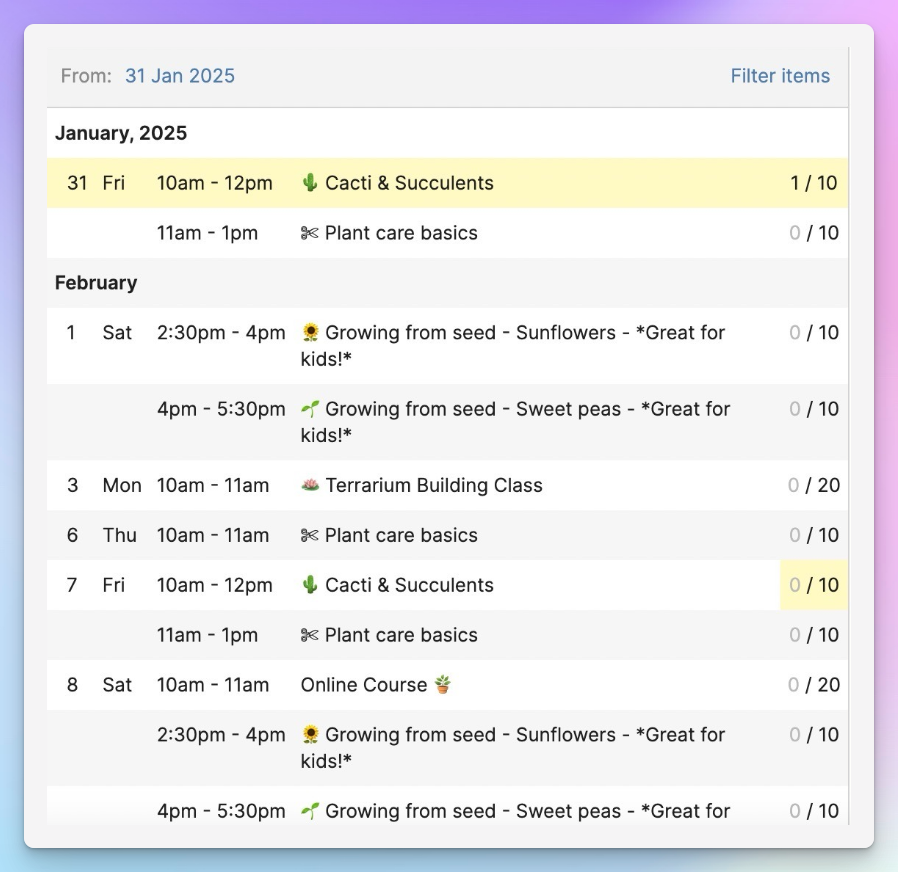
Bookwhen is a lightweight booking tool for classes, courses, and workshops. It is the default choice for solo instructors who want a booking page live this afternoon and do not need family accounts or term enrollment.
Best for: Solo instructors and small studios selling drop-ins, passes, and one-off workshops at modest monthly volume.
Key features:
- Recurring classes, multi-session courses, and one-off workshops
- Waiting lists with automatic promotion, on the Standard tier and above
- Attendance tracking with CSV export
- Memberships, passes, and subscriptions
- Custom booking forms with validation, file attachments, and a separate child-attendee field
- Stripe, PayPal, Apple Pay, Google Pay, and Klarna, plus automatic Zoom links and calendar sync
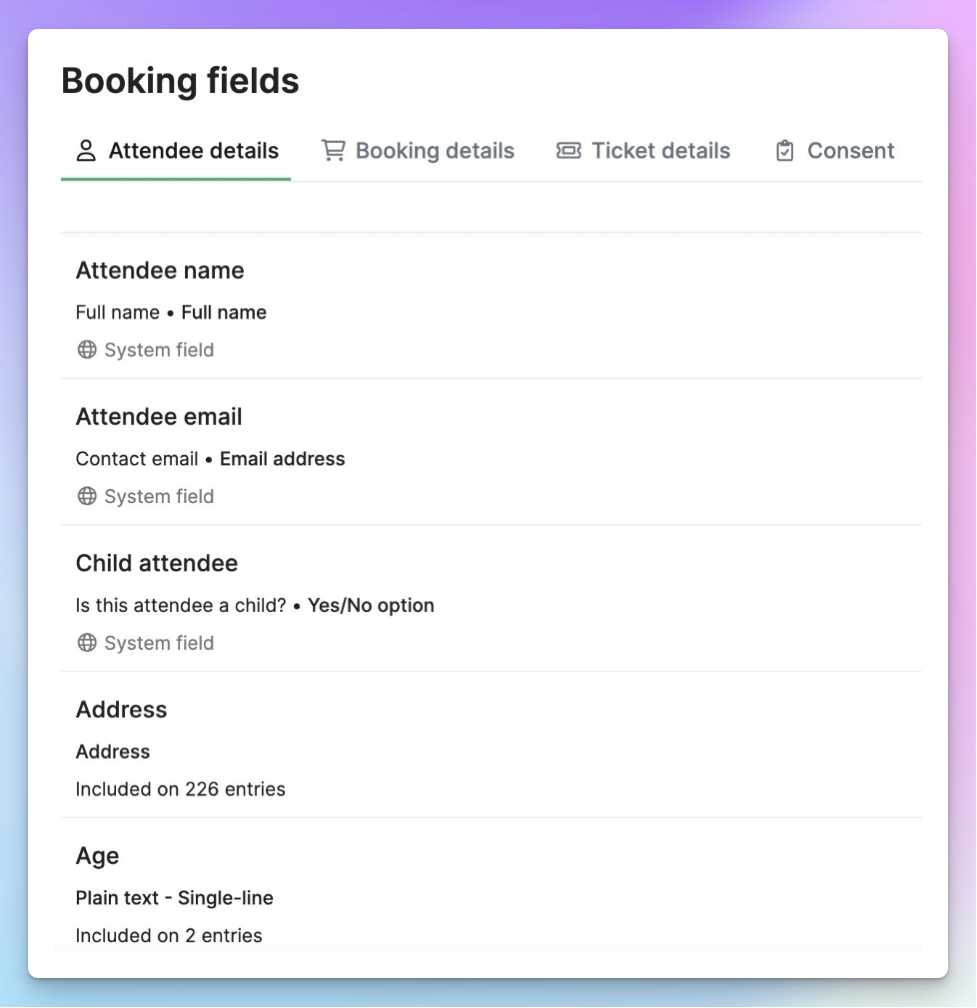
Pricing: A free plan covers 50 bookings a month on free events. Paid tiers start at about $15 a month (Lite, billed in GBP) for 300 bookings and two team members, Standard at about $24 adds memberships, waiting lists, attendance tracking, and reminder emails, and Plus at about $49 adds booking volume, 10 team members, and phone support. Annual billing gives two months free, and there is a 14-day free trial with no card. Pricing checked August 2026.
Pros:
- The cheapest genuine class tool here, and the free tier is usable if your sessions are free
- Rated for simplicity at scale: 4.9 on Capterra across 179 reviews and 4.8 on Trustpilot across 528
- Reviewers who moved from heavier platforms report paying less for a system they find simpler to run
Cons:
- The schedule is a list rather than a calendar, and moving a customer between classes is fiddly
- No Zapier, HubSpot, Xero, or QuickBooks integration, and the Mailchimp connection is export-only
- No family accounts, sibling discounts, or term enrollment, and waiting lists and attendance both need the Standard tier
What users say: Trustpilot reviewers at 4.8 across 528 reviews praise how much weekly time it saves on bookings, cancellations, and transfers, and say support replies by the next working day. The recurring frustrations are the list-only schedule view and switching a customer's class.
Verdict: A strong pick if your business is drop-ins and workshops and you want to spend nothing on setup. If price is the deciding factor, our roundup of free class booking systems shows where the free tiers stop being enough. Term-based businesses will hit the family-account ceiling quickly.
3. TeamUp - Best for Membership-Led Fitness Studios
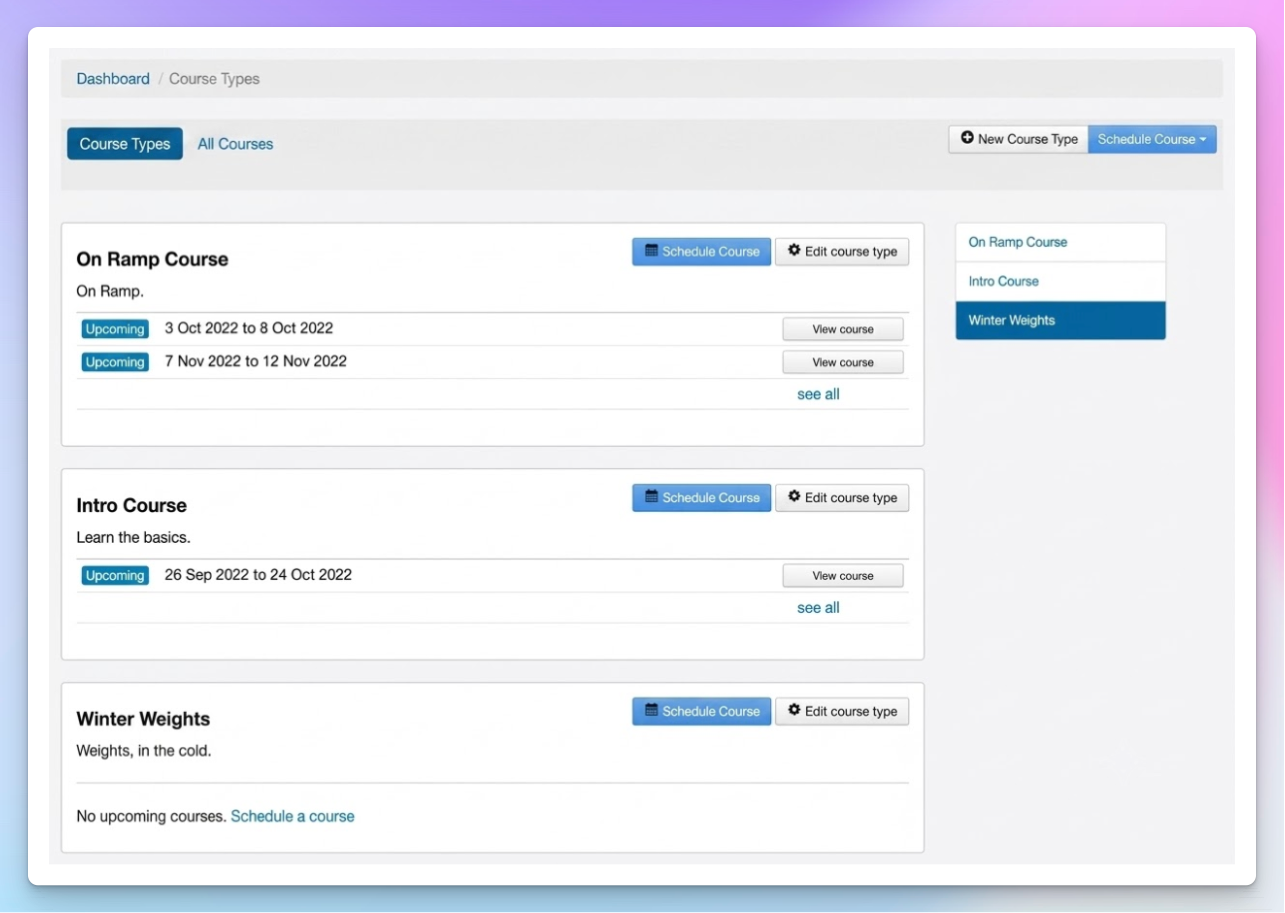
TeamUp is class and membership software for gyms and fitness studios, and it has the strongest recurring-billing engine in this group. If your revenue is memberships rather than term fees, it is built for your model. Adult fitness businesses can also compare it against our own fitness class booking software.
Best for: Yoga, pilates, CrossFit, martial arts, and bootcamp studios whose income comes from memberships and class packs.
Key features:
- One-off and recurring classes across multiple locations
- Memberships, prepaid packages, and class packs with automated recurring billing
- Waitlists that notify and auto-fill when a space opens
- Rosters and attendance reporting
- On-demand video library alongside the live timetable
- Stripe and GoCardless, plus Zapier, Mailchimp, Zoom, ClassPass, and a full REST API
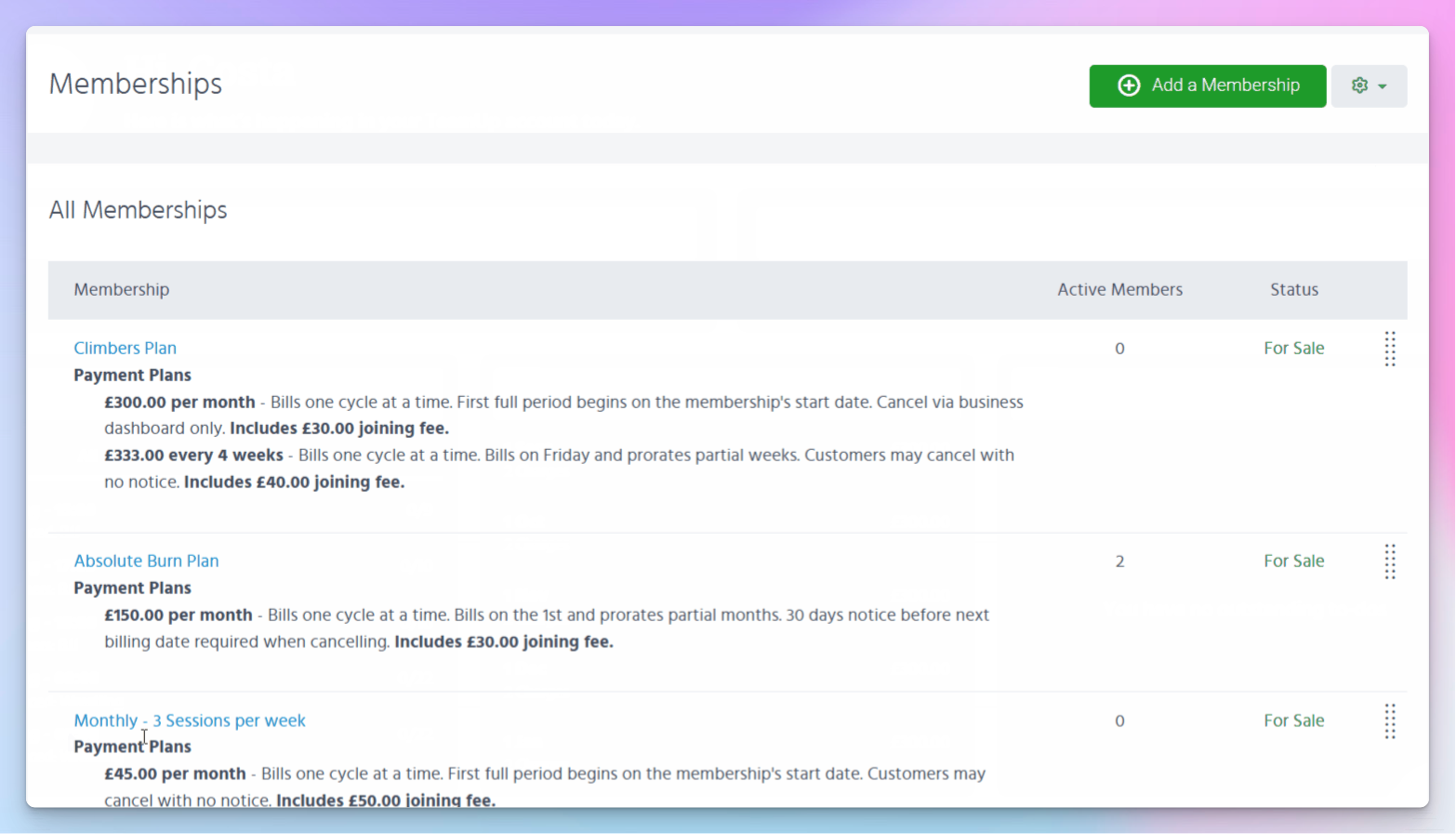
Pricing: Usage-based on active customers, meaning anyone who books or buys in a given month, counted once. The entry band of up to 100 active customers is reported at around $104 to $119 a month; the pricing page itself publishes the next band at $189 a month for 101 to 200 customers, rising to a $309 flat rate at 601 and above. A custom branded app is $99 a month on top. No setup fee and no contract. A free trial is offered but the length is not published. Pricing checked August 2026.
Pros:
- The deepest membership and recurring-billing logic here, including proration and joining fees
- Broad integration list plus a REST API, which is unusual at this price point
- Reviewers repeatedly mention getting a human on the phone, and a steady stream of shipped features
Cons:
- The entry price is steep for a studio with a handful of active members, and users report increases over time
- Custom billing rules get confusing once your membership model stops being standard
- Trustpilot sits at 2.6 across 68 reviews, which is a soft signal at best given only one review in the past year, but the split with its other scores is worth knowing about
What users say: Capterra rates it 4.8 across 346 reviews and G2 4.5 across 329, both praising setup and support. Trustpilot is much lower on a thin, mostly stale sample, so we would weight the two larger review pools.
Verdict: The right answer for a membership-led studio with enough members to justify the price. If your customers are families booking children into terms, the billing model works against you rather than for you.
4. ClassForKids - Best for UK Kids' Activity Clubs
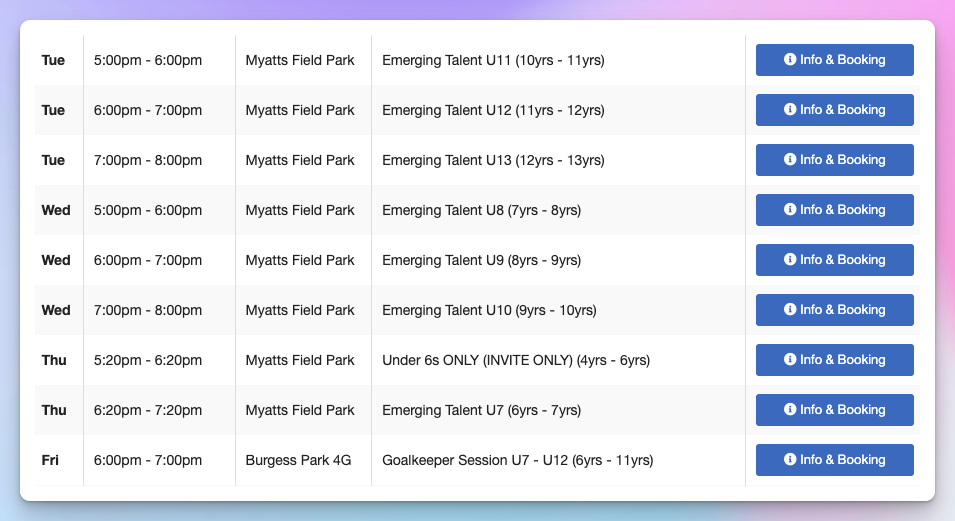
ClassForKids is term booking plus a parent discovery marketplace, aimed squarely at children's activity clubs. It is a UK product with UK support and GBP-only pricing, so US and international providers can rule it out on that alone.
Best for: UK dance, gymnastics, football, swimming, and after-school clubs that want term booking and free exposure on a parent-facing listing site.
Key features:
- Term booking, camps, and subscriptions, with trial and transfer handling
- Rosters with emergency contacts and an offline download
- Parent portal with instant booking confirmation
- Waiting lists with email notification
- Bulk SMS and email to parents
- Card, Apple Pay, and Google Pay with automatic retry on declines, plus a free listing on the ClassForKids parent site
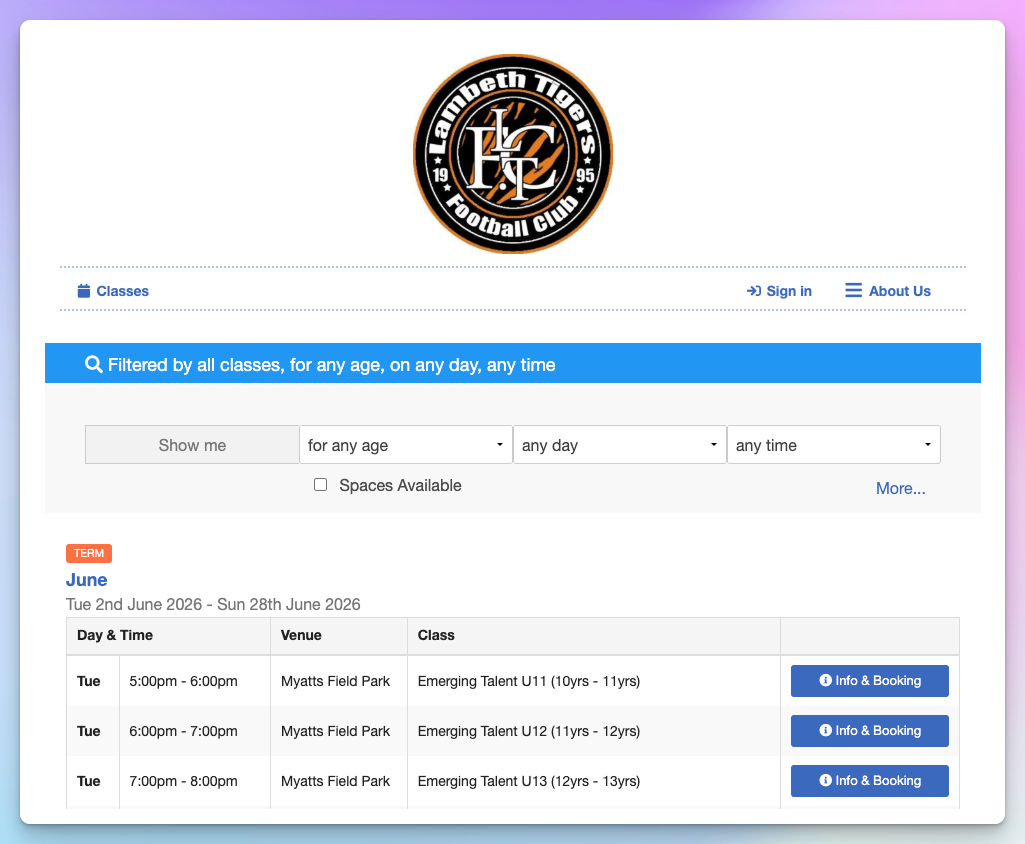
Pricing: About $44 a month (billed in GBP) on the standard plan, with unlimited children, coaches, and venues, and bespoke pricing for larger clubs. On top of that sits a per-booking platform fee of roughly 3.1%, plus an extra 0.5% on subscription payments, and that percentage is not published anywhere. Clubs can pass most of the fee to parents, but subscription payments always absorb it. SMS is charged separately. There is a 7-day free trial with no card. Pricing checked August 2026.
Pros:
- Purpose-built for term-based children's clubs, so the core admin needs almost no configuration
- The parent marketplace produces genuine discovery, and clubs cite real growth after switching
- Support quality is the most-repeated praise in reviews, including from clubs who call it expensive
Cons:
- Booking fees are not disclosed upfront, and clubs of similar size report noticeably different totals
- No Zapier or CRM connection, no weekly payment option, and you cannot search payments by child name
- GBP pricing, UK support hours, and UK SMS make it a poor fit outside the UK
What users say: Capterra rates it 4.8 across 99 reviews while Trustpilot sits at 4.0 across around 101. Owners describe feeling more in control of the business, and the sharpest criticism is fee transparency.
Verdict: A safe choice for a UK kids' club that values discovery and hands-on support and is comfortable with a percentage of every booking. Anyone outside the UK, or running adult classes, should look elsewhere on this list.
5. Sawyer - Best for US Children's Activity Providers
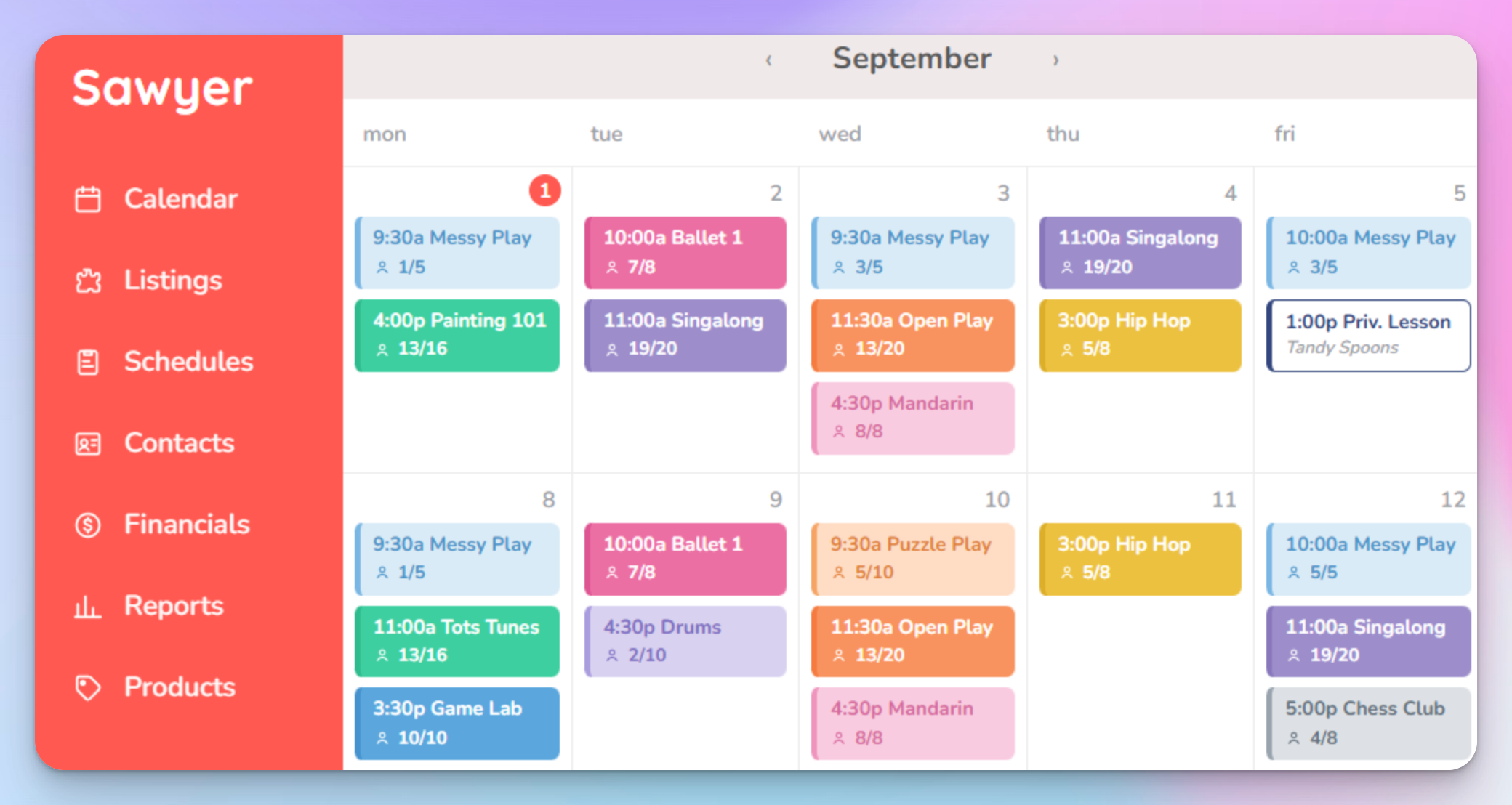
Sawyer is registration software for US children's activity businesses, paired with a parent marketplace that lists your classes to families searching in your area. DaySmart acquired it in November 2023.
Best for: US children's activity providers running semesters and camps who want marketplace discovery and can absorb a revenue share on it.
Key features:
- Registration for semesters, camps, events, drop-ins, private lessons, and recurring appointments
- Automatic listing on the Sawyer parent marketplace
- Automated rosters with mobile check-in and check-out
- E-signature waivers collected at checkout
- Installment payment plans, up to five per activity
- Family portal with calendar sync and 24-hour reminders
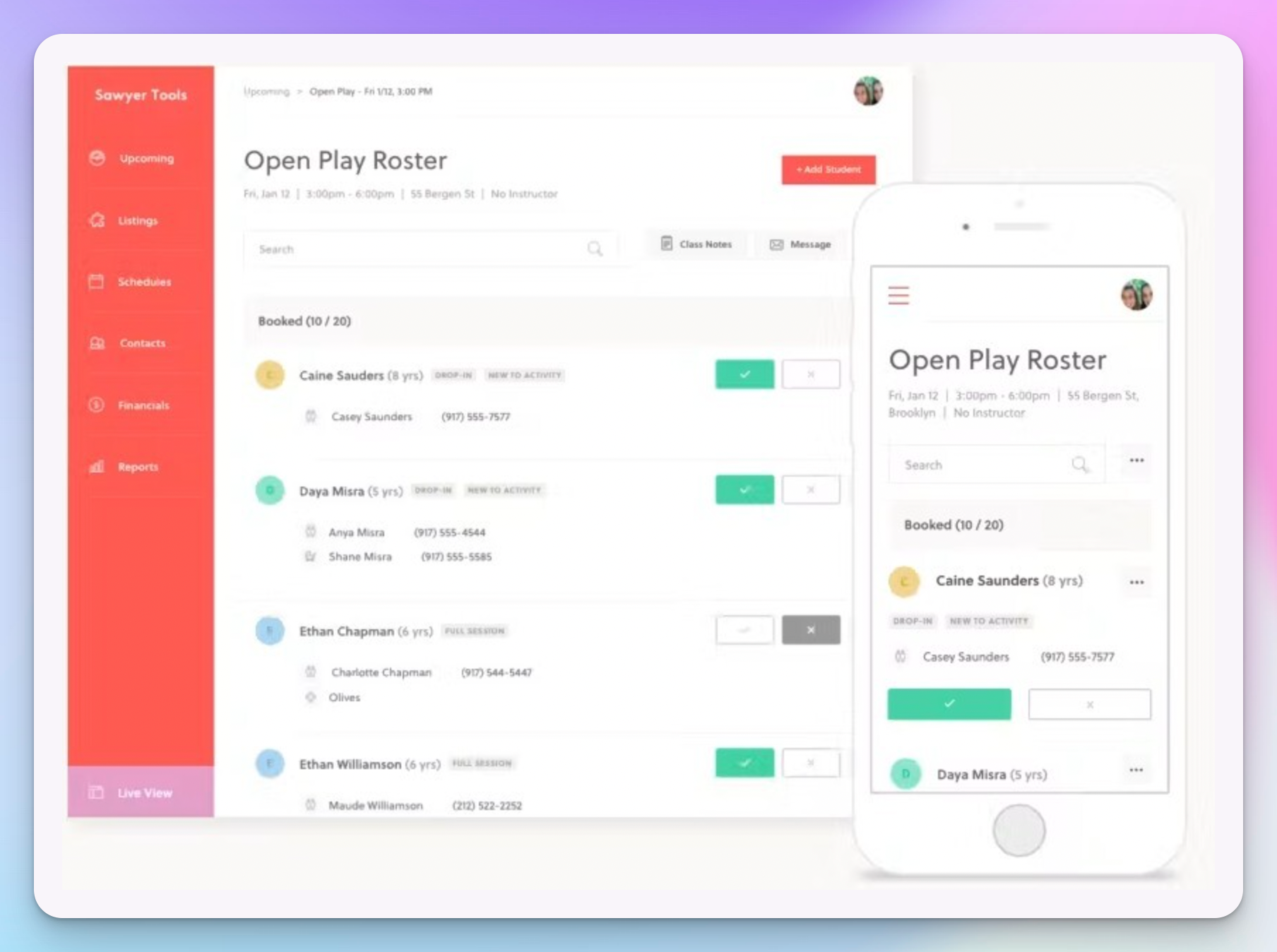
Pricing: Launch is $149 a month with a 30% marketplace fee, Grow is $219 with 20% and adds payment plans, waitlists, and monthly billing, and Scale is $399 with 15%, Zapier, and custom reporting. Card processing is 3% plus $0.30 for new accounts from June 2026, ACH is 0.8% capped at $5, and families pay a platform booking fee of $1.99 to $3.99 at checkout. There is no self-serve trial, only a demo. Pricing checked August 2026.
Pros:
- The most complete registration feature set aimed specifically at US children's programs
- Parent-side experience is easy enough that families complete bookings without support
- Marketplace exposure that can genuinely fill a new session, if you accept the revenue share
Cons:
- The most expensive entry price here, and the subscription starts before a single enrollment arrives
- Changing an activity's date means deleting and re-adding every enrollment
- The booking widget slows host websites down, customization is limited, and there is no native mobile app
What users say: Capterra rates it 4.5 across 319 reviews. Reviewers praise same-day support and the parent-facing interface, and the dominant complaint is cost, described by more than one reviewer as the most expensive tool in the market.
Verdict: Worth the price if marketplace discovery is a real acquisition channel for you. If you already fill your classes, you are paying $149 a month plus a revenue share for reach you do not need, and our camp registration software page covers the same jobs for less.
6. Jumbula - Best for After-School and Enrichment Programs
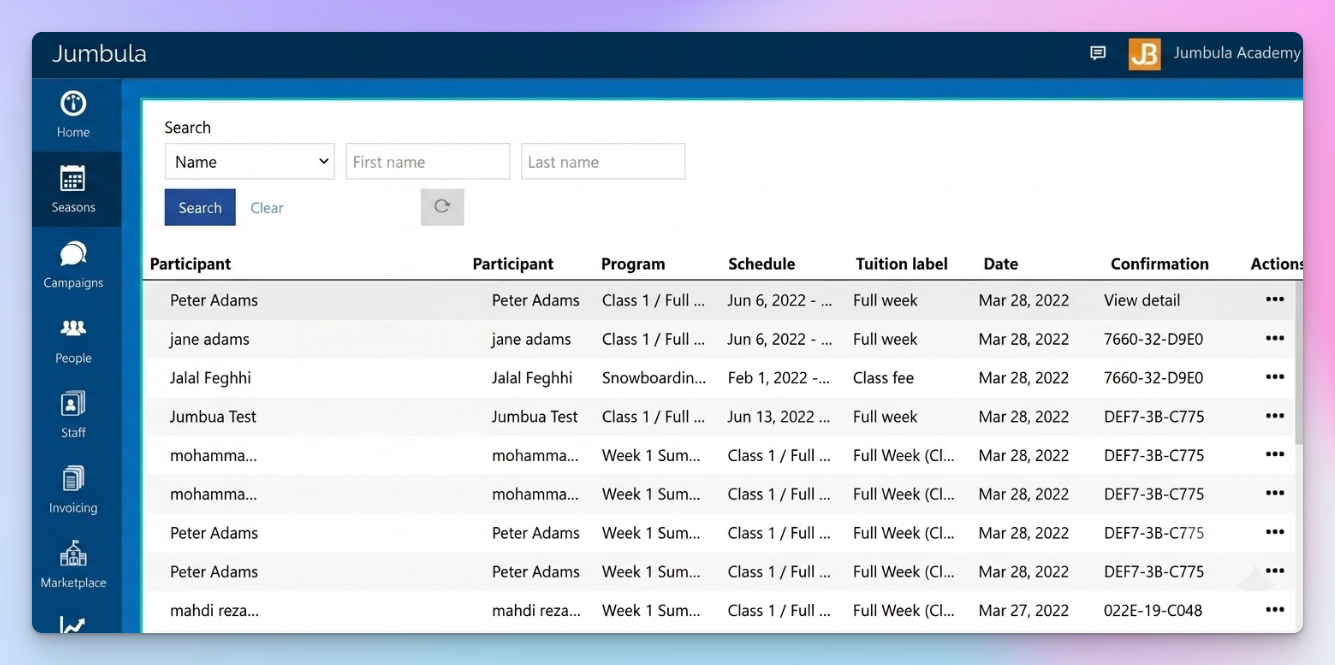
Jumbula is a registration platform for after-school programs, enrichment providers, camps, and nonprofits. Its strength is form and program customization at a price nothing else here matches.
Best for: After-school and enrichment programs that need deep registration customization on a small budget, especially nonprofits.
Key features:
- Drag-and-drop custom registration forms, waivers, and contracts
- Digital check-in and check-out with PIN and QR verification
- Staff profiles, roles, and schedules
- Installment plans and automatic billing
- Coupon codes with eligibility rules and expiry dates
- Rosters, attendance, and enrollment analytics, plus email and SMS campaigns
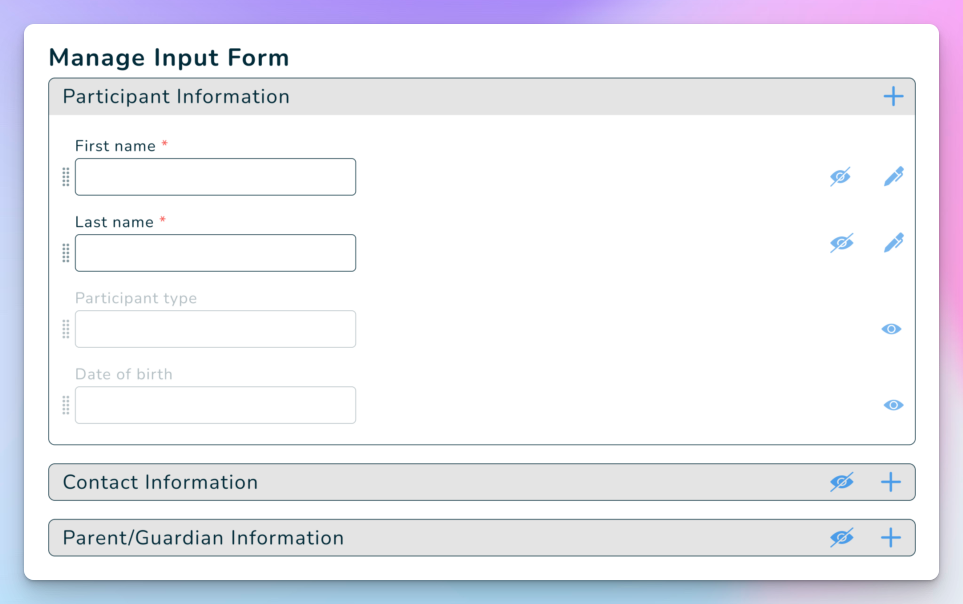
Pricing: Pay As You Go is $15 a month, or $144 a year, and includes 10 free enrollments with usage add-ons after that, plus unlimited staff and families. Rise is $150 a month for unlimited enrollments, and Ascend is $285 a month with 5,000 emails, 500 SMS, and a dedicated account manager. Nonprofits get 25% off annual plans, and a free trial is available. Pricing checked August 2026.
Pros:
- The most customizable registration forms in this group, by a clear margin
- Capterra scores value for money at 4.8, and the nonprofit discount pushes it further
- Unlimited staff and family accounts even on the cheapest tier
Cons:
- The parent-facing side is dated and iframe-based, which shows most on mobile
- Onboarding is inconsistent, with reviewers reporting no clear step-by-step launch plan
- Building sessions and seasons carries a real learning curve
What users say: Capterra rates it 4.5 across 127 reviews, with flexibility and support the strongest themes and the parent-facing interface the weakest. Reviewers running PreK-12 programs report it meeting nearly all their requirements.
Verdict: Excellent value if your registrations are complicated and your budget is not. If your customers judge you on how the booking page looks, compare it with an after-school club booking system built for the parent experience first.
7. Acuity Scheduling - Best for Instructors Mixing 1:1 and Group Sessions
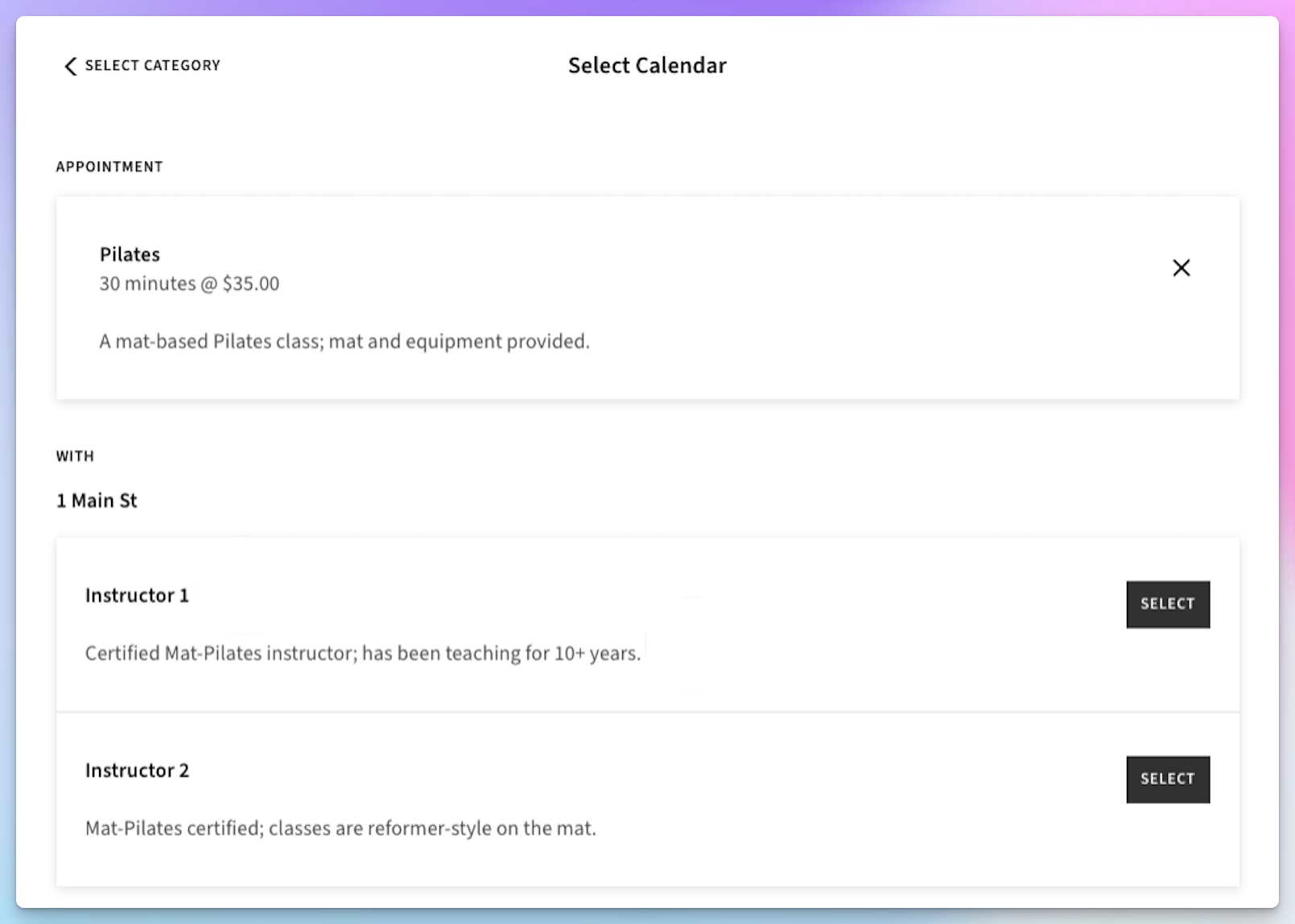
Acuity is appointment scheduling software owned by Squarespace, and it is very good at what it was built for. Group classes exist, but they are an option on an appointment type rather than a class management system.
Best for: Solo instructors, therapists, and trainers who mostly sell one-to-one time and run the occasional group session.
Key features:
- One-time and recurring group classes with capacity limits
- Class packages, memberships, and recurring billing
- 24/7 self-booking on a branded scheduling page
- Automated email and SMS reminders
- Custom intake forms
- Google, Outlook, and iCloud calendar sync, plus Zoom and Google Meet, and resource blocking for rooms and equipment
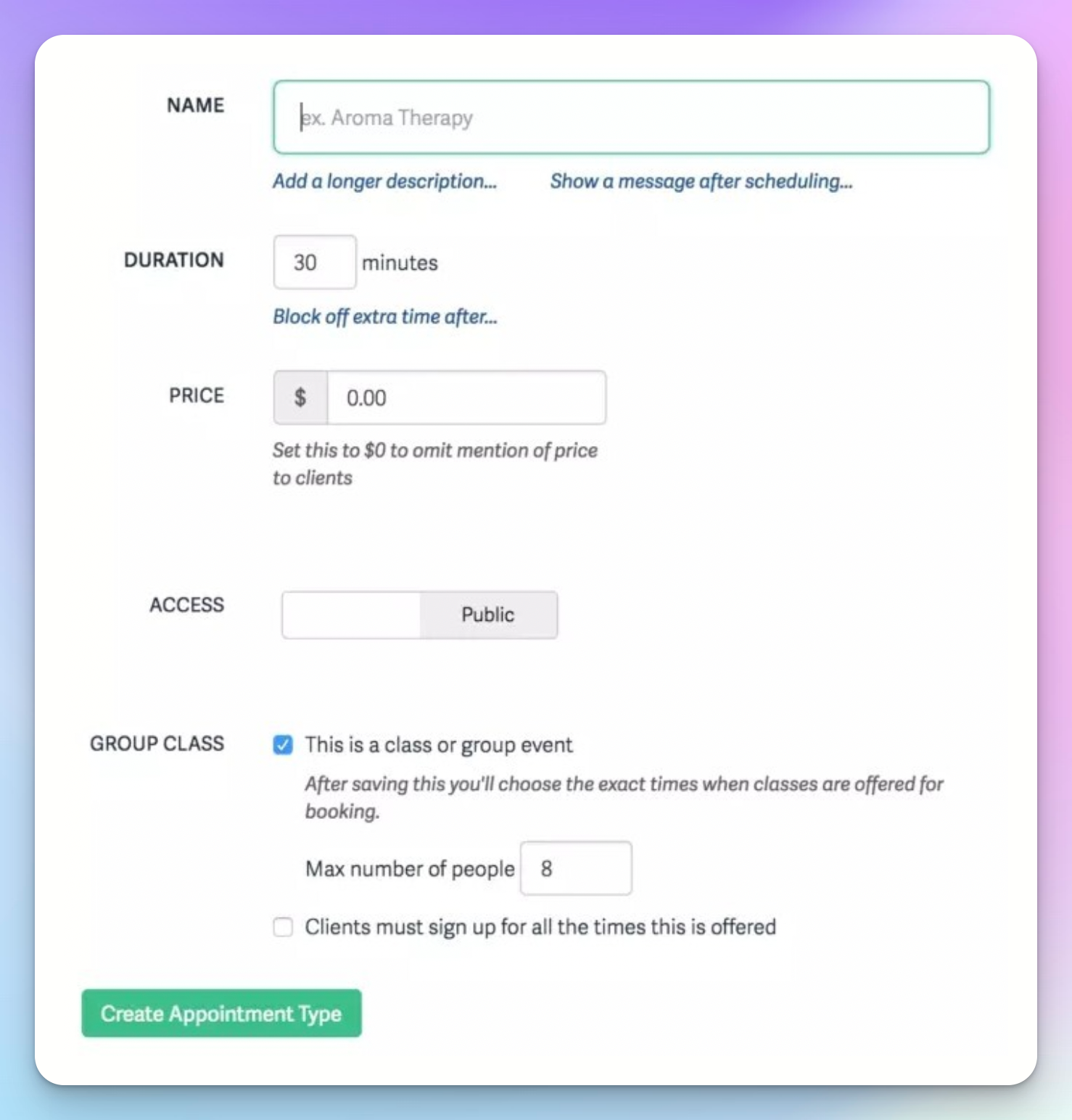
Pricing: Starter is $20 a month, Standard $34, and Premium $61, dropping to $16, $27, and $49 on annual billing, with Enterprise quoted. Card processing runs at 2.9% plus $0.30 through Stripe, Square, or PayPal. There is a 7-day free trial with no card, though no emails or texts are sent during it, and there is no free plan. Pricing checked August 2026.
Pros:
- Among the easiest scheduling tools to set up, which is why its review volume dwarfs everything else here
- Reminders visibly cut no-shows, and calendar sync across staff is reliable
- Cheap entry price with real payment, intake form, and package features included
Cons:
- No waitlist for group classes at all, confirmed in Acuity's own help center. For a class business that is a daily problem
- No native attendance roster, no family or child accounts, no sibling discounts, and no term enrollment
- Support since the Squarespace acquisition is email-only, with reviewers reporting waits from 12 hours to several days
What users say: The split is the story. Capterra rates it 4.8 across 5,754 reviews and G2 4.7 across 431, while Trustpilot sits at 1.5 across 602. People rate the product highly and the company badly, and almost all of the anger is about support.
Verdict: If your week is mostly private sessions with a class or two attached, Acuity is a good, cheap tool. If your week is classes with the occasional private session, the missing waitlist, roster, and family accounts will cost you more time than the subscription saves.
8. Mindbody - Best for Multi-Location Wellness Businesses
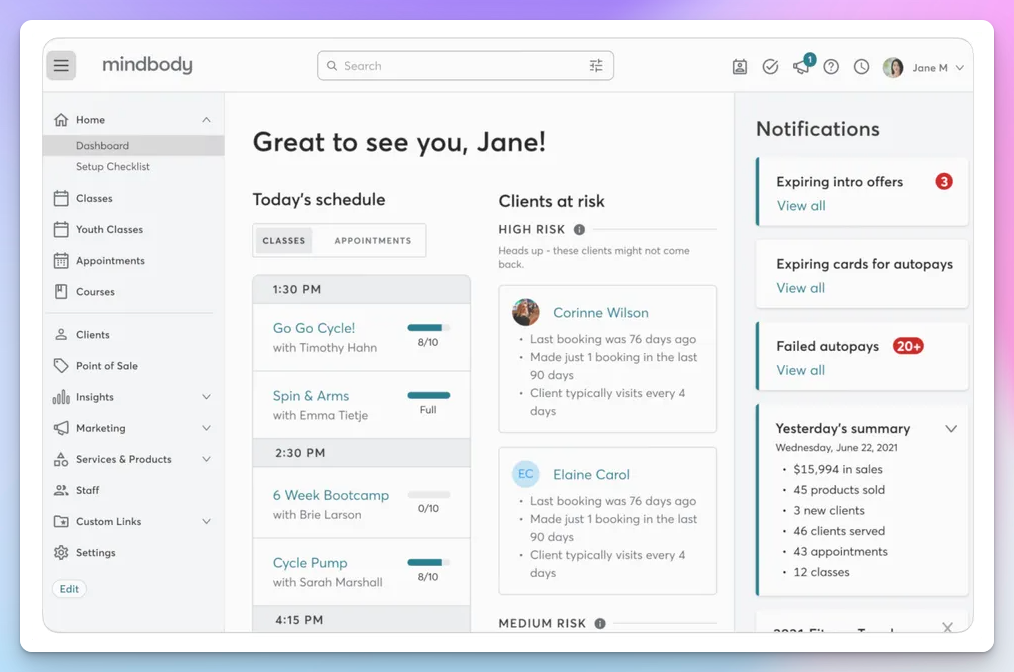
Mindbody is the incumbent in the wellness category and the platform most readers will already have been pitched. It is genuinely deep, genuinely expensive, and sold on a two-year contract.
Best for: Multi-location studios, spas, and wellness chains that want marketplace reach and have someone to run the platform.
Key features:
- Class scheduling with capacity, waitlists, and recurring series
- Memberships, packages, automatic card updates, and gift cards
- Listing on the Mindbody consumer marketplace
- In-house payments and retail POS
- Bulk SMS and email plus automated client journeys
- Staff management and payroll reporting, with deep sales, lifetime value, and attendance reports
Pricing: Starter is $99 to $159 a month per location, Accelerate $259 to $279, Ultimate $499, and Ultimate Plus $699 and up, with Enterprise quoted. A branded mobile app is a $249 to $299 monthly add-on unless you are on Ultimate Plus. Marketplace bookings from new clients carry a fee of up to around 20%, and payment processing is about 3.5%. A 24-month contract is standard and there is no self-serve trial, only a demo. Independent cost breakdowns put realistic all-in spend at $565 to $1,080 a month, which is a third-party estimate rather than an official figure. Pricing checked August 2026.
Pros:
- Reporting depth that operators use weekly, including lapsed-member flags and revenue by source
- Close to a complete system, so there is little to integrate or reconcile
- The consumer marketplace delivers real bookings in dense urban markets
Cons:
- Pricing opacity and add-on stacking mean the advertised $99 rarely resembles the invoice
- The standard 24-month contract, with reviewers reporting refused early exits
- Support routing and wait times, reflected in Capterra sub-scores of 3.6 for value and 3.8 for service
What users say: Capterra rates it 4.0 across 2,993 reviews and the distribution is bimodal, with 1,435 five-star and 247 one-star reviews. G2 sits at 3.7 across 518. Its Trustpilot score of 4.3 pools consumer app users with business owners, so it flatters the operator experience.
Verdict: The right platform for a multi-site wellness business that needs POS, payroll, and marketplace reach and can staff it properly. For a single-location club or a kids' activity business, you are paying for scale you will not use and signing two years to do it.
9. Amilia SmartRec - Best for Rec Centers and Multi-Site Organizations
Amilia SmartRec is registration and facility management software for community organizations. Think YMCAs, JCCs, Parks and Recreation departments, and multi-facility clubs rather than single studios.
Best for: Rec centers, community organizations, and multi-site clubs that register participants and rent facilities from the same system.
Key features:
- Self-serve registration with restrictions by age, gender, location, membership, or skill level
- Memberships and CRM with family and household accounts
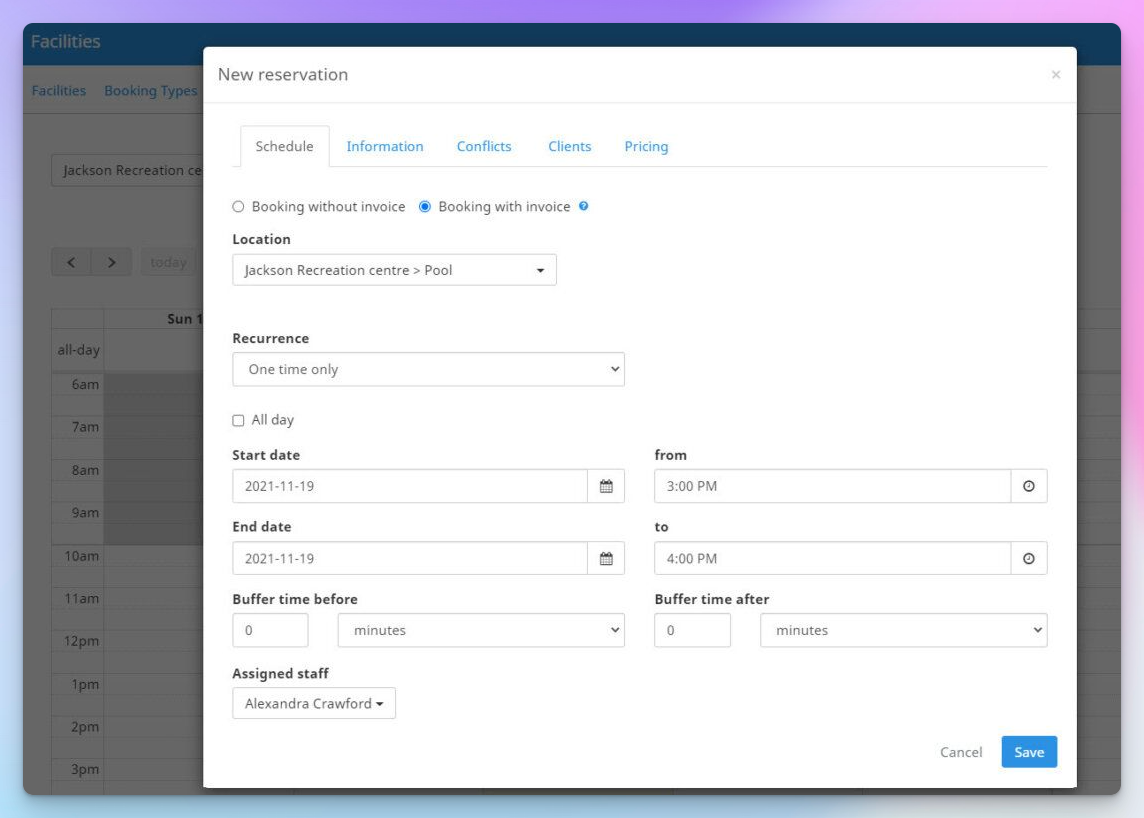
- Facility booking with capacity limits and maintenance blocks
- Hub-and-spoke account structure for multi-site organizations
- Branded online store for activities, memberships, drop-ins, rentals, and merchandise
- Recurring billing, installment plans, and 40 or more pre-built reports
Pricing: Standard is $99 a month with a setup fee from $899, covering 5,000 active accounts and up to 10 facilities. Advanced is $499 a month with setup from $2,999, covering 10,000 accounts, 20 facilities, and phone support. Custom pricing covers unlimited use with a strategic account manager. On top sit a 1% service fee on every invoice, card processing at 2.85% plus $0.30, and eCheck at 1% plus $0.50. There is no self-serve trial, only a demo. Pricing checked August 2026.
Pros:
- Families genuinely self-serve, with the vendor reporting 80% of transactions completed without staff help and 52% of registrations made outside business hours
- Facility booking and program registration in one system, which almost nothing else here offers
- Strong financial reporting, mass activity editing, and automated waitlists
Cons:
- A steep learning curve, with users reporting they still needed support weekly six months in
- Payouts take seven to eight days to reach the bank, against one to two elsewhere
- Setup fees start at $899, which is more than a year of most tools on this list
What users say: Capterra rates it 4.3 across 148 reviews. Reviewers value the reporting and self-serve adoption, and consistently flag the number of steps needed to input activities.
Verdict: A sensible pick for a rec center or multi-facility organization with staff to run it. For a one-person studio, the setup fee alone rules it out.
10. Arlo - Best for Professional Training Providers
Arlo is training management software for course providers, professional bodies, and CPD businesses. It is on this list because a multi-session professional course is a class, but the business model behind it is invoices and certificates rather than card payments at the point of booking.
Best for: Training providers and professional bodies that invoice organizations and issue certificates.
Key features:
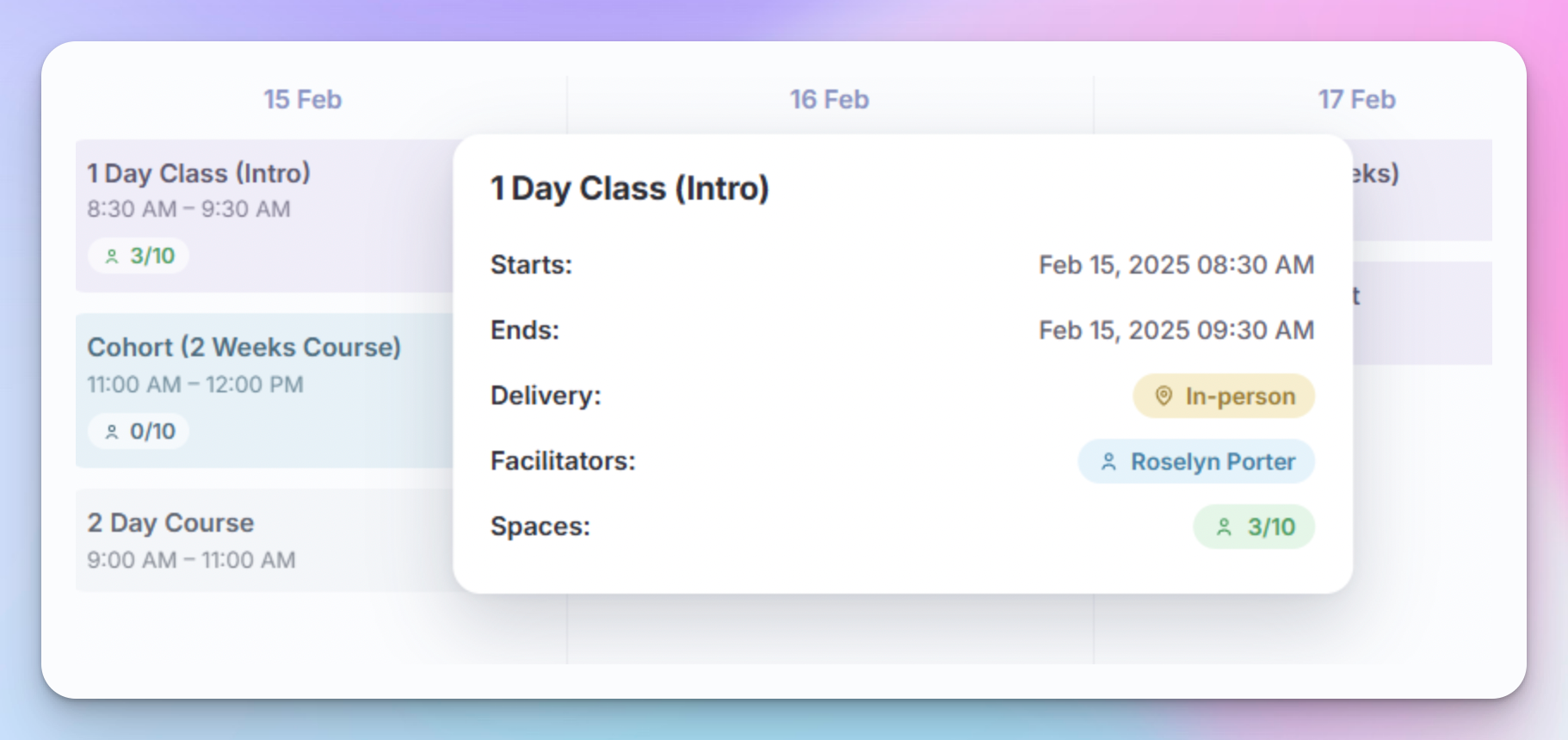
- Multi-session and one-off course scheduling with repeat templates, across in-person, live online, and blended delivery
- Customizable registration forms with automated confirmations
- Training-specific CRM with lead tracking
- Automatic invoicing with partial payments, discounts, and vouchers, through Stripe and Xero
- Auto-generated certificates with renewal reminders for compliance training
- Waitlists, email automation for reminders and surveys, and revenue and attendance dashboards
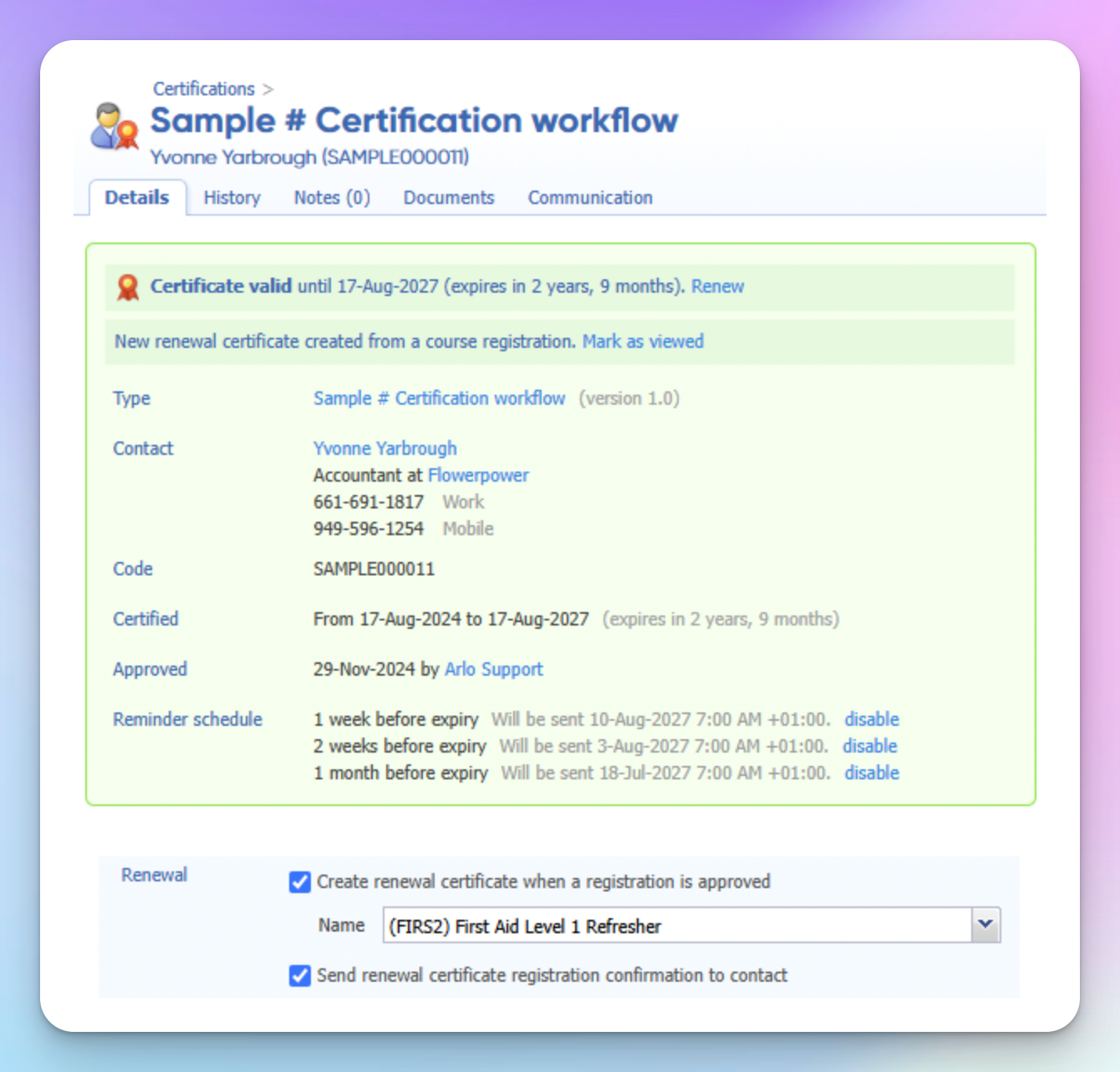
Pricing: Per admin license: Simple is $132 a month, Professional $227, and Enterprise $302, dropping to $118, $204, and $271 on annual billing, with a Scale tier quoted. On top of that sits $2.15 for every paid registration and $1.07 for every free one. eLearning authoring and SCORM hosting are $99 a month each, or $149 for both. There is a 14-day free trial with no card and unlimited users. Pricing checked August 2026.
Pros:
- Registrations, scheduling, invoicing, and certificates in one place, which removes a lot of manual coordination
- Stripe, Xero, and Zoom integrations that reviewers describe as working cleanly
- Support is consistently praised, with responses inside about 24 hours
Cons:
- Paying per admin license and per registration stacks up fast as volume grows
- Limited front-end customization and SEO control on the public course pages
- Support runs New Zealand and UK hours, which is awkward from North America, and corrections require deleting and re-registering
What users say: Capterra rates it 4.7 across 147 reviews and G2 4.5 across 85. The praise is consolidation and support, the complaint is almost always the pricing model.
Verdict: The right tool if your classes are professional courses sold to employers and your output includes certificates. Wrong tool for a kids' club or a fitness studio taking card payments at checkout.
Which class booking system should you choose?
For most activity providers, Pembee is the best overall pick: recurring classes and terms, rosters, family accounts, sibling discounts, waivers, and Stripe payments in one place at a flat $45 a month with no contract. Bookwhen is the cheaper option if you sell drop-ins and workshops, TeamUp is the stronger one if your revenue is memberships, and Sawyer or ClassForKids make sense if marketplace discovery is worth a revenue share to you. Match the tool to the way you actually sell, not to the longest feature list. If you run a studio, our guide to dance studio software goes deeper, and our roundup of online booking systems for small businesses widens the field.
FAQs
What is the best class booking system?
For providers running recurring group classes, Pembee. It covers term scheduling, rosters, family accounts, discounts, waivers, and payments at a flat $45 a month with a 30-day trial and no contract. The right answer shifts with your model: Bookwhen for drop-ins and workshops, TeamUp for membership-led fitness studios, Jumbula for after-school programs on a tight budget, and Amilia SmartRec for rec centers that also rent facilities.
How much does a class booking system cost?
Between about $15 and $700 a month, and the pricing model matters more than the headline number. Pembee is $45 a month flat, Bookwhen starts around $15, and Jumbula's entry tier is $15. TeamUp charges by active customers, Mindbody charges per location on a 24-month contract, and Arlo charges per admin license plus $2.15 per paid registration. Percentage fees hide the real cost: ClassForKids adds roughly 3.1% per booking and Sawyer takes 15% to 30% on marketplace bookings.
Do I need a class booking system or an appointment scheduler?
If you sell seats in a session that repeats, you need a class booking system. Appointment schedulers price and book one person into one slot, so they lack the things classes depend on: term enrollment, rosters, waitlists, and family accounts. Acuity is the clearest example on this list. It is excellent at appointments and has no waitlist for group classes at all.
Which class booking systems have a free trial?
Pembee gives you 30 days with no card. Bookwhen gives 14 days plus a permanently free tier for free events, Arlo gives 14 days, and Acuity and ClassForKids both give 7. Jumbula offers a free trial. Sawyer, Mindbody, and Amilia SmartRec are demo-led, so you will speak to a salesperson before you see the product.
Can a class booking system bring me new customers?
Some can. ClassForKids, Sawyer, and Mindbody all run consumer marketplaces that list your classes to people searching in your area, and they charge for it: a percentage of the booking fee, 15% to 30% on marketplace enrollments, or up to around 20% on new marketplace clients. Pembee has no marketplace, so you drive your own traffic. If your classes already fill from word of mouth, that revenue share buys you reach you do not need.